For more than 20 years I was cycling and had foot pain. When I searched for help the solutions were: shoe fit, insoles, wedges (correcting angles). I felt strongly that I was simply not pedaling properly - biomechanics, kinesiology; I was pedaling more like a piston engine than with a smooth rotary motion.
Eventually I built a sensor to show pedaling foot angle (among other things). What I found is that for me the angle of my foot during the pedal rotation made a significant difference not only eliminating foot pain, but improving speed and endurance. Correcting my years-long pedal inefficiency is ongoing, and I continue tracking my performance.
I do not yet have independent verification of my device accuracy, but I’ve done much to self test it. What I’m wondering now is whether this device might help others. I have an old blog post (April 2022) which I can update if others are interested.
SOUNDS INTERESTING. Do you have any pictures? Marc
Super interesting. I have a connective tissue disorder that predisposes me to tears. I have had five orthopaedic surgeries thus far, though not on ankles yet (very close though). To train with my bike stand I need to use KT tape and an ASO on each ankle because of the partial tears in my peroneus brevis tendons, plus braces on my knees.
Positioning is critical. People with my medical issue have more flexibility than others and this extended range works against us in high force and repetitive situations. If I had had support (KT tape) and better positioning all along I perhaps could have prolonged the quality of my tendons. And now, if I had feedback from a device maybe I could train more, train more safely, and one day return to some intermittent, longer rides. AND when I finally have surgery (needing cadaver tissue from a healthy donor) and make that long road to recovery, a product like this could mean I wouldn’t re-tear again badly or quickly or maybe not at all.
Thanks for sharing. Would love to hear more.
Sensor…
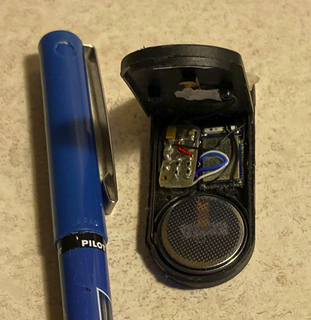
If you are a Strava user there are more pictures associated with my bike rides which I think you can see by following me: Bryan Striemer (I think I’m the only person with this name)
As for surgical recovery, physical therapy, injury avoidance, I can describe the use scenarios I’ve currently explored, and hopefully someone with medical experience can weigh in on how it might help.
One phone app shows real-time display of angles, and will change color if you are out-of-range (any angle ranges can be specified). Cadence is also displayed. Foot tilt and rotation is captured, but not currently displayed in real-time. The averages can be displayed, saved and reset. (This app was intended for bike fitters to try different bike parameter adjustments.) The saved data can be emailed - in the scenario when a cycling customer wanted a record of pedal angles associated with bike physical adjustments.
There are many other things to view. Another example is to overlay cadence with each (of the four) pedal angle waveforms to see the affects of pedal rotation speed. (I’ve read bike fitters describe knee/hip issues showing up in foot angles at various rotation speeds.)
My blog posts are extremely out of date, but looking at them (and maybe my Strava data) will lead to the issues of most interest. And hey, thanks for the questions! -Bryan
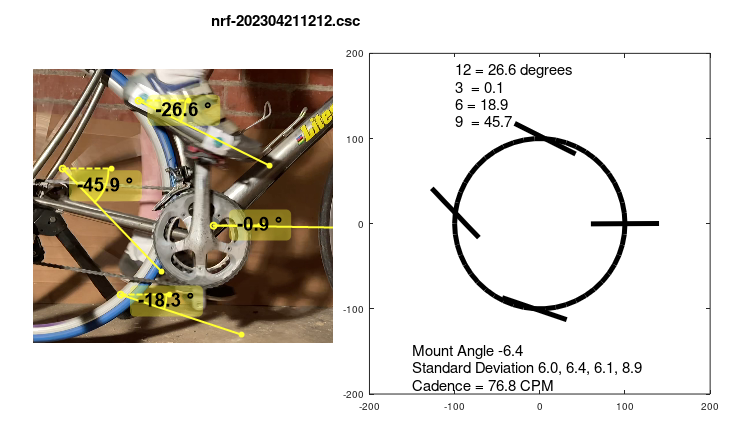
In the case where you want to train in specific ankle ranges my prototype can show each of four foot locations in the pedal cycle. If you are outside a specified range the display will change color. I have always planned to add a (phone) vibrate feature for when you don’t want to be watching the phone (riding outdoors).
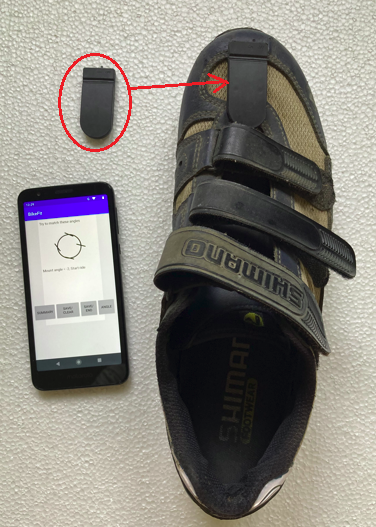
Thank you! I 'd love to try something like this.
I realize now that I never adequately described how the device helped me with my foot pain. A few days ago I wrote the story and I’ll now try to paste it into this forum (my first attempt failed as I am not allowed to embed more that 3 images per posting). Here goes…
This is a story of three friends who have been riding bicycle together for about 25 years. One is a skilled rider who started competitive cycling in his youth, ultimately becoming a semi-professional cyclist. The second person began recreational riding sometime after college and is considered to have good riding skills. The third rider purchased a used road bike at age 45, developed riding skills by desperately trying to keep pace with his two friends (and suffered foot pain on most rides).
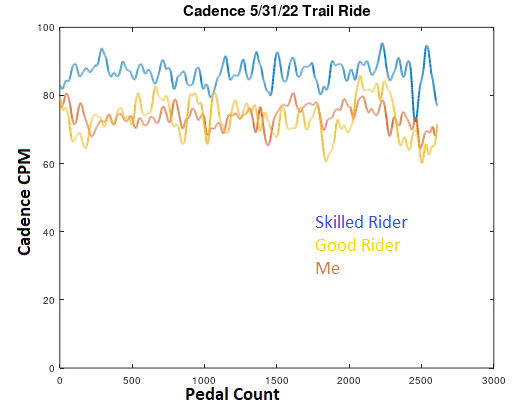
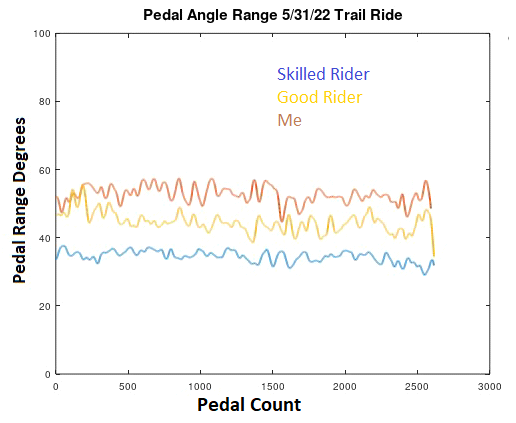
After addressing most of the causes of cycling foot pain (without relief) I started watching how my friends pedaled their bikes. I didn’t know much about pedaling styles except that I was very different from the others. We used the first three sensor prototypes to compare our pedaling styles on a 10-mile trail ride.
Here are the results (problem areas in red on this one chart).
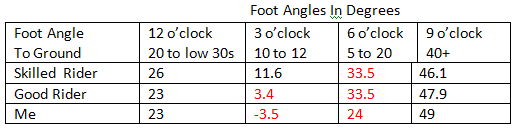
Here is a reference on one fitter’s opinions on foot angles.
Recommended angles…

The numbers confirmed my observations. My foot angle range was too wide, two of my four rotational foot positions were off and my cadence was probably too slow.
This was the beginning of a year-long effort to train myself to pedal a bike properly (and eliminate my foot pain).
During the upcoming winter my pedal training began by using my sensor to try (unsuccessfully) to get my foot angles correct. I could usually get all but one foot angle correct. I’d get all four correct for a couple pedal strokes briefly, then they would stray out of range.
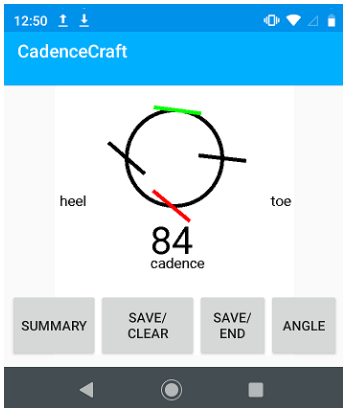
Green line toe too high
Red line toe too low
On about the third or forth week I was frustrated and, as usual, I looked away from the phone and just did my workout. And I was thinking about a report I had read that wrote “lift your knees” (rather than lift your leg). I started extending my knees on the up-stroke and the ride felt very different and easier. After a couple minutes I happened to glance at the phone and all my angles were in-range and stable. In fact, I was unable to ankle my foot out-of-range as long as I was lifting my knees.
I don’t know if I was using different muscle groups, or simply firing signals in a more synchronized manner. Riding this way was not comfortable, but it seemed to be correct. Most important – I no longer maintained constant foot pressure on the pedals.
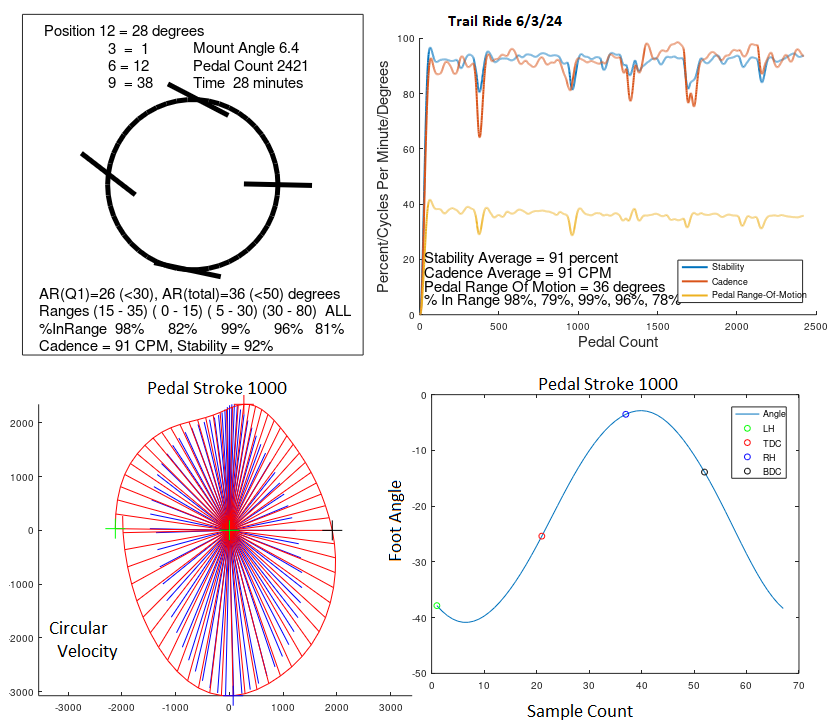
Initially I could maintain this pedaling style for only a few minutes, and would always lose correct angles if my mind wandered. I developed a weighted grading system and scored each of my rides. The metrics included: stability (pedal motion smoothness), circularity (constant circular velocity), foot angle accuracy, and special weighting on Right Horizontal foot angle, cadence and total foot angle range (my three problem areas). By spring the new pedaling style was feeling more natural, and I had no foot pain.
I don’t have the speed or perceived effort numbers, but those first outdoor rides felt amazingly easy and fast. I remember thinking that my biking years would have been much more enjoyable had learned to ride properly at the beginning.
Scoring Metrics:
A technical aside about IMU pedal angle detection (without external reference): I’m aware of only one product that tried solving this problem - the Brim Brothers’ Zone D.P.M.X. cleat-based power meters. I read Barry Redmond’s patent and tried unsuccessfully to duplicate his method, and maybe he was equally unsuccessful. (I don’t know the exact reasons for the product failure, but in an interview he mentioned foot angles as an issue.) After five years of tinkering I stumbled upon a completely new and unique method, which is what I use here.
On the subject of cycling foot pain: “An Australian study in 2012 found that over half of cyclists (53.9%) reported experiencing foot pain whilst cycling…” Cycling Weekly Oct 13, 2022. There are certainly many causes and each individual’s problem(s) may be somewhat unique. Mine was overwhelmingly a lack of proper physical motion. It wasn’t until I could measure and watch my pedaling style that I started to make meaningful corrections. I have read bike fitters report that after proper mechanical adjustments the riders will naturally find their most efficient and comfortable pedaling style. Conscious pedaling adjustment is immediately abandoned in those moments when the sprint or challenge begins. I never automatically adjusted to a fit bike, but it was true that change took time. After about a year of data tracking, every ride is now naturally free of foot pain.
If you look back at the Scoring Metrics image, and the Circular Velocity picture you see a bump at the top of the pedal stroke. I have suspected for some time that my crank arms are too long. That bump shows a slowing of my pedal stroke. This could be caused by a saddle too low, knee bend issues, or I’m simply tired. None of these is the case and I want to swap my 175 mm crank arms with something a little shorter. Also, the Pedal Stroke 1000 chart shows that I drop my heel too much on my power stroke (TDC to BDC). If I start TDC with a more shallow angle (which is now rather steep) I may be able to transfer a little more power.
Concerning the circular velocity distortion and my idea of shortening my crank arms, I decided it would be a good idea to check the other foot (leg). I mostly monitor my dominant (right) foot. I have measured both feet extensively, but for all the metrics except velocity. I implemented a scoring method to quantify velocity smoothness. A higher score indicates better constant velocity. Here is what I found.
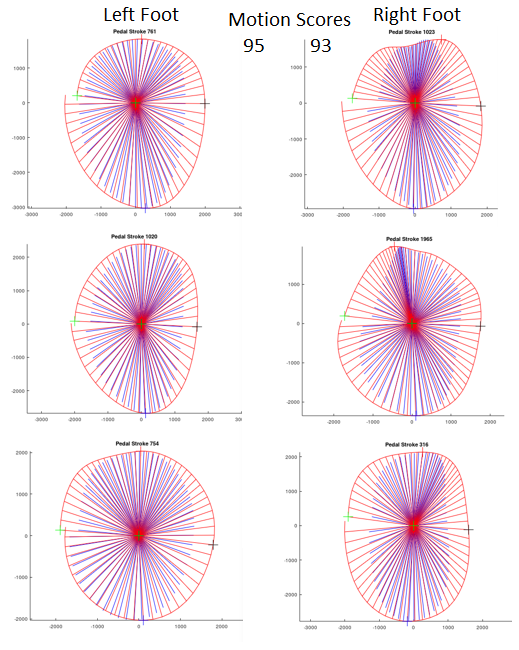
It appears that I do have range of motion issues with my right knee. It might relate to cartilage loss and cortisone injections last year.